
Main Club – 5 July 2024
Our speaker, Julie Fielder, is a mycologist and botanist who has worked with the Department of Biodiversity, Conservation and Attractions (DBCA), investigating the effects of logging and burning in our forests. She is part of a team working on a book about fungal ecology and how to manage the land for beneficial fungi, Fungi4Land.
Julie began by pointing out how numerous and diverse fungi are and that they are an ancient lineage, quite distinct from plants and other life forms. Although we are familiar with fungi mainly through their spore bodies (mushrooms, etc.), they can be in the form of motile cells with flagellae, or single cells like yeasts, or long strands, only 3 to 4 microns across, called hyphae. Fungi are found in every ecosystem, even in and on our bodies. 90% of fungal species live in soil, making up a big proportion of the soil. They perform ecosystem services such as decomposition, nutrient recycling, and soil structure creation. They even form “highways” for bacterial movement.
Fungi are geo-engineers that play a major part in forming soils. This is done partly through their role in lichens, which break down rock, and partly by digging deep into bedrock through cracks and breaking the rock using turgor pressure and corrosion by acids. They also break down minerals and extract iron.
But fungi also play a major role in ecosystems such as mycorrhizae – mutually beneficial relationships with plants, in which the fungal hyphae deliver water and minerals to plants in exchange for sugars. About 80% of plants form mycorrhizal relationships with fungi. Julie outlined some of the different forms of mycorrhizae:
- Arbuscular fungi play an important role in producing glomalin, a “glue” that improves soil structure and water infiltration. Other benefits include better resistance to pathogens and allowing plants to access phosphates outside the root depletion zone.
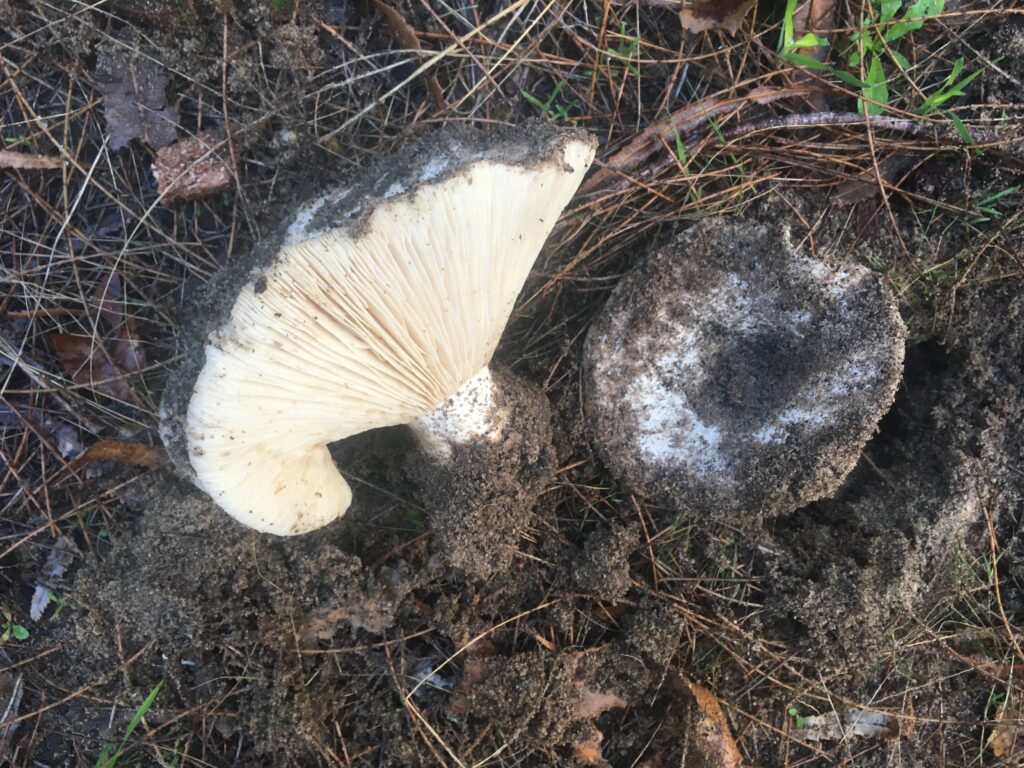
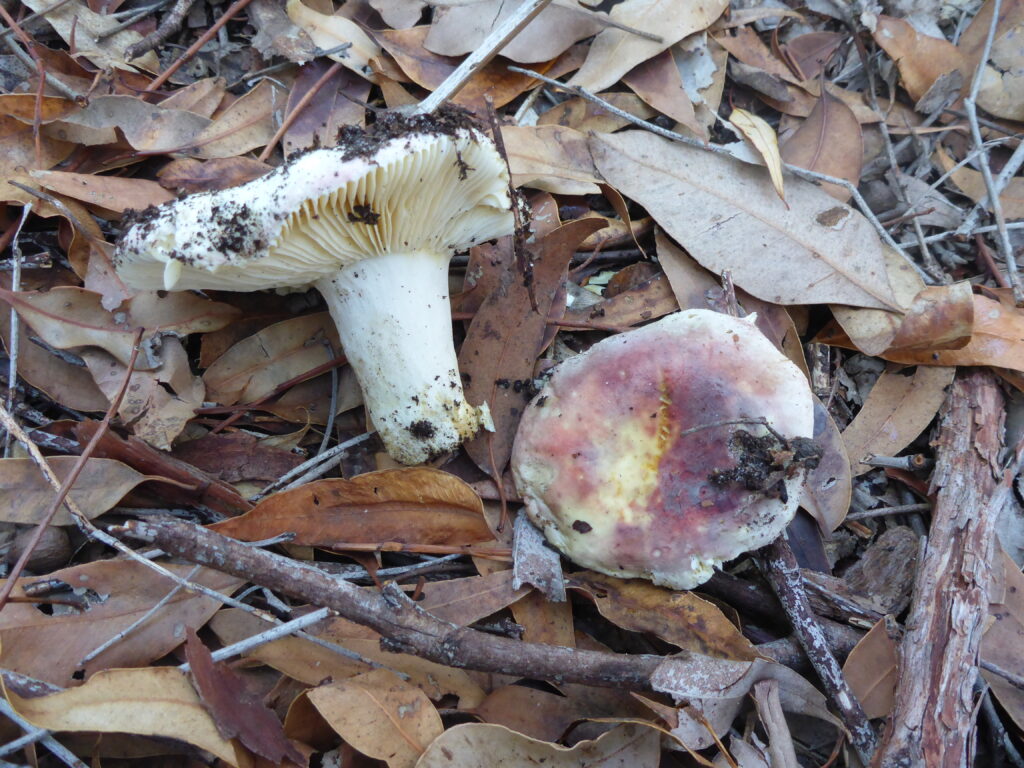
- Ectomycorrhizae (e.g. Russula and Cortinaria) form a relationship with many trees and woody shrubs. Their beneficial hyphal networks, which can cover hundreds of square metres in the soil of older forests, are impacted if forests are cleared. A Hartig net of hyphae forms around the root tips and between the cells, where exchange occurs.
- Sebacinales is a group that forms mycorrhizae with a wide variety of plant partners, including orchids. Orchids parasitise fungal partners, with little benefit to the fungus. So far, there is not a lot known about Ericoid mycorrhizae.
Question time produced some interesting topics, such as the detrimental effects that fire, compaction, crop harvesting, and Climate Change can have on soil fungi.
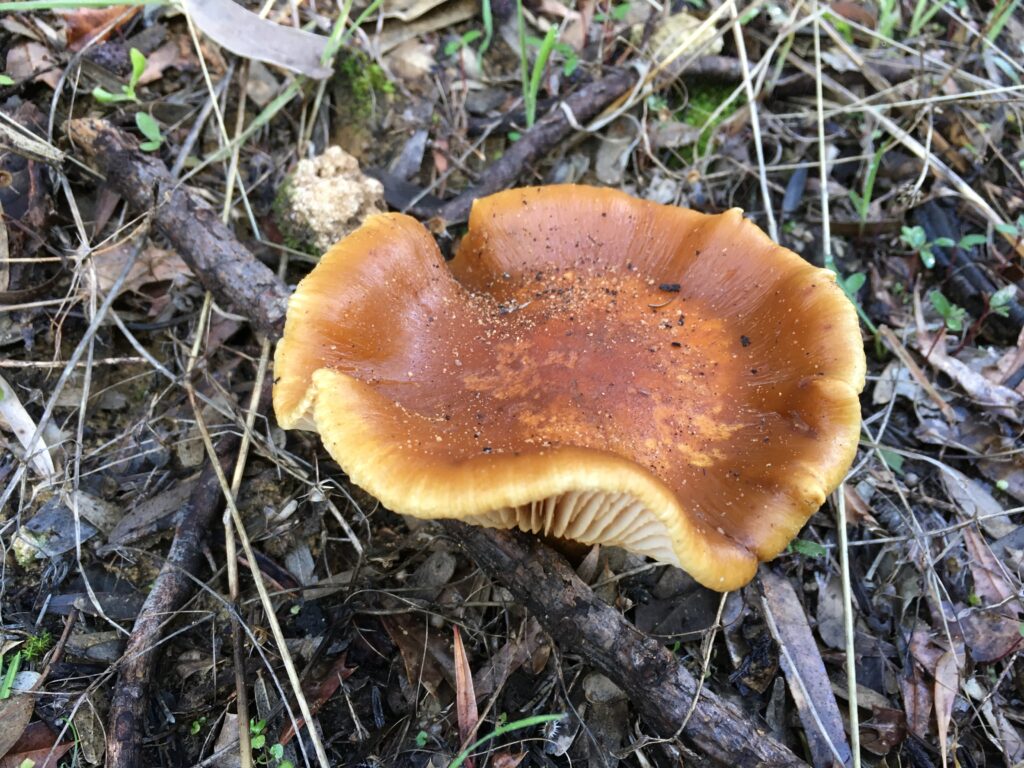
Julie is part of a team led by Roz Hart and Sapphire McMullan-Fisher, working on a crowd-funded book called Fungi for Land – a practical guide for land managers for conservation and restoration-focused management. It is about the role of fungi within ecosystems and how to manage for healthy fungi in farms, gardens, reserves and bushland. Julie encouraged us to take photos of fungi as citizen scientists and send them to iNaturalist or Fungimap Australia.
Mike Gregson