

Northern Suburbs Branch 23 August 2023
Golly! A surprise before we even started. As six of us (Jenny caught up with us later) were about to set off, a woman preparing to walk her dogs asked if we were off to spot birds. She then told us she had seen a large eagle in the park several days before and offered to show us a photo. Both the photo and the bird were stunning. A magnificent Wedge-tailed eagle (Aquila audax) is sitting on a branch of a dead Tuart, with a clear sky as background. None of us had seen a “wedgie’’ so close to the city.
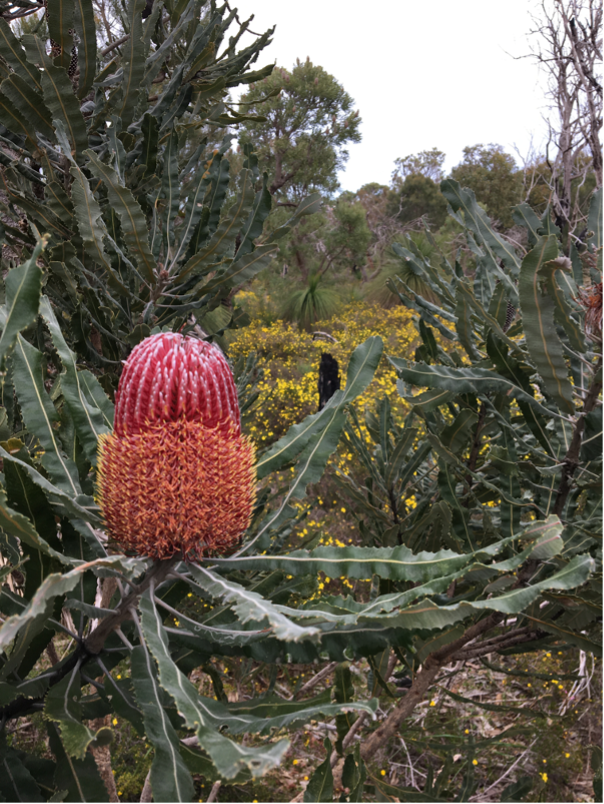
Our circular walk of about 4km took us through a mix of tuart and banksia woodlands where the understorey of Yellow Prickly Moses (Acacia pulchella) and Yellow Buttercups (Hibbertia hypericoides) were eye-catching, particularly when seen together with the prolific Old Man’s Beard (Clematis pubescens) and Native Wisteria (Hardenbegia comptoniana). At higher levels, the Firewood Banksia (Banksia menziesii) and the Parrot Bush (B. sessilis) were attracting bees and Carnaby’s Black Cockatoos (Calyptorhynchus latirostris), respectively.
We were fortunate to be at the right time and place late in our walk when a flock of Carnaby’s, estimated to be between 100 and 200 birds, decided to feed on the parrot bush, sometimes only a few metres from us. A lot of time was spent capturing footage on cameras and phones.
Firewood Banksia
– Photo Credit: Don Poynton
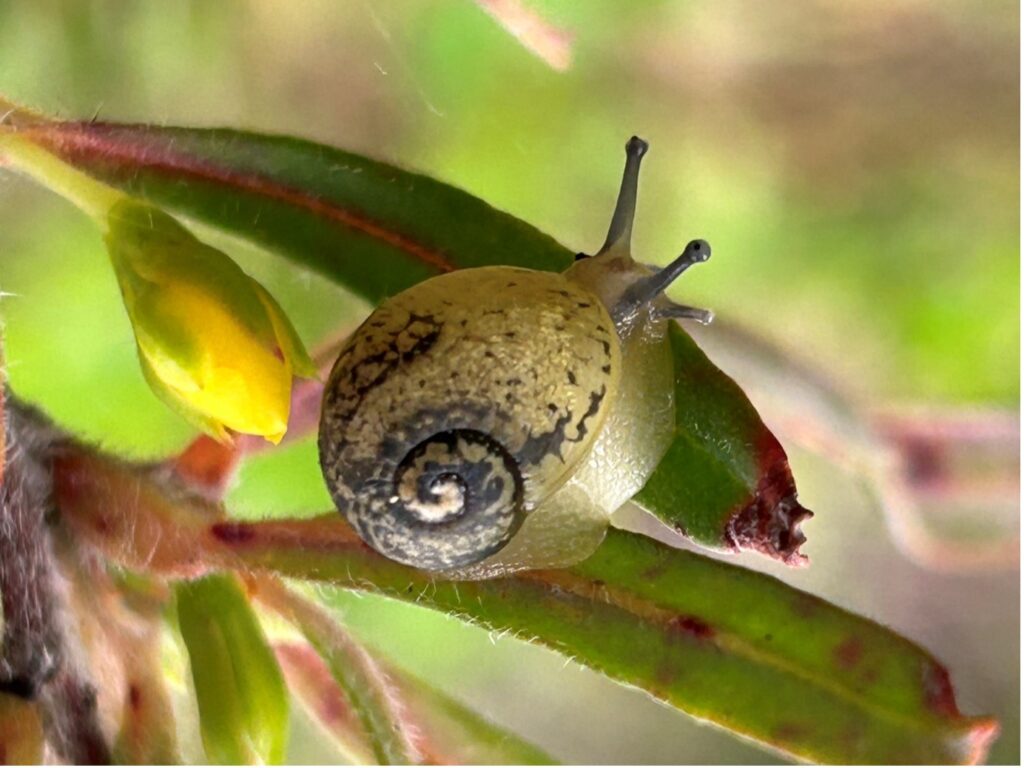
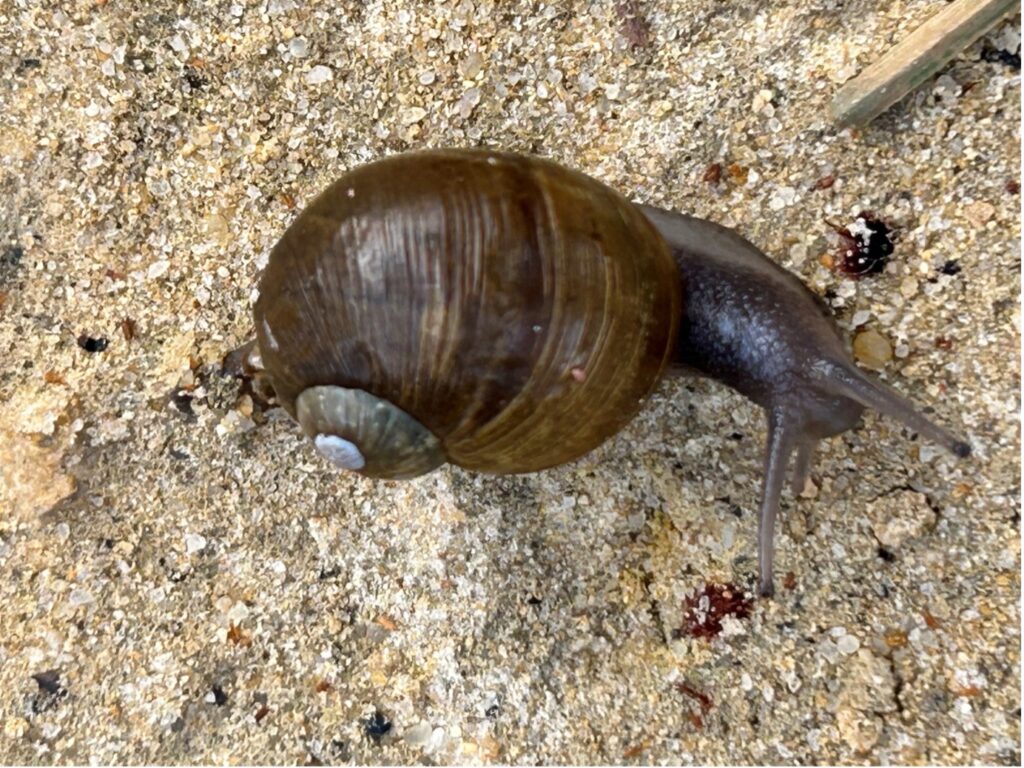
It was disappointing to see so few orchids. Only a couple of Carousels (Caladenia arenicola), two Cowslips (Caladenia flava), and only one Donkey Orchid (Diuris sp.). Another disappointment was finding a juvenile and later an adult Green Snail (Cornu apertus), a declared pest under section 22 of the Biosecurity and Agriculture Management Act 2007. Photos and coordinates were later reported to the Pest and Disease Information Service of the Department of Agriculture.
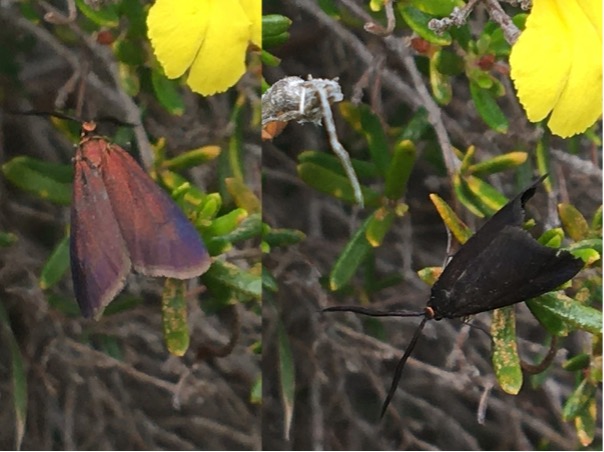
On the positive side, we were intrigued to find a moth, probably a Forester Moth (Pollanisus sp.), that appeared to change the colour of its wings from reddish-brown to black; no doubt this was an illusion caused by it changing its position on the leaves of the Hibbertia on which it was perched.
Magic Moth – Photo Credit: Don Poynton
Our bird count for the morning was 22 with no rarities, the most splendid being a male Fairy Wren (Malurus splendens) in full breeding plumage.
Don Poynton